 More about Percussion Workshop
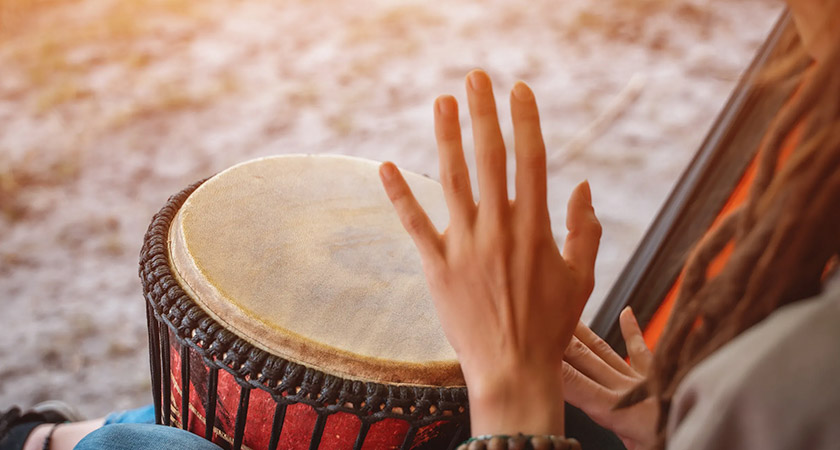
 There’s something magical about making rhythm together. In no time at all, you feel how a group of individuals transforms into a single, swinging whole. During a percussion workshop, you grab a djembe, shaker, or other instrument and get to work together. It might feel a bit awkward at first, but before you know it, a beat emerges in which everyone finds their own place.
Everyone plays percussion at some point. Some do it on a djembe or drum set, others drum a bit with their fists on the table. You could say that percussion is a kind of basic human need. Whether a warning signal or a form of expression, percussion is like a musical heartbeat. The literal definition of percussion (taken from English) derives from “to beat” or “strike” and is thus a collective term for percussion instruments. Bongos, congas, and samba balls are examples of percussion instruments. Most percussion instruments are made of wood with an animal skin stretched over them. You play them with drumsticks or simply with your hands. By striking them with your hands, you create exotic sounds and quickly find yourself immersed in African or Latin atmospheres. The most famous percussion band is the Brazilian samba band. Creating these exotic rhythms requires multiple percussion instruments. It is important that these instruments are well-coordinated with one another. It’s all about timing and feel. A percussion workshop is therefore also ideal for team building. It involves good teamwork, creativity, humor, listening, observing, taking initiative, and executing. And during one of our percussion workshops, you’ll experience what it’s like to let your rhythm shine through.